+256 392 911 059 / +1 818 290 6623 info@cycadssafaris.com

What Is a Safari Sun-downer in Serengeti National Park?

What Is a Safari Sun-downer in Serengeti National Park?. If you’re planning a trip to Tanzania safaris, you’ll quickly notice that some experiences go beyond “game drives.” One of the most talked-about moments in Serengeti National Park is something called a safari sun-downer. It’s a blend of wildlife, culture, and the calm magic of sunset—designed to help you slow down and truly absorb the landscape.
In this blog, we’ll break down what a safari sun-downer is, why it’s so special in the Serengeti, and how it fits into the bigger picture of the best safari in East Africa.

Understanding the Term: What “Sun-downer” Means

A safari sun-downer is essentially a guided sundown experience that happens near sunset. The term “sun-downer” is widely used across safari tourism in East Africa, and it usually refers to a relaxed stop in the bush where guests enjoy drinks and sometimes snacks—often while a guide shares stories, interprets the environment, and watches wildlife behavior before night falls.

Think of it as a carefully timed pause during your safari day—one that turns the golden hour into an unforgettable part of your itinerary.
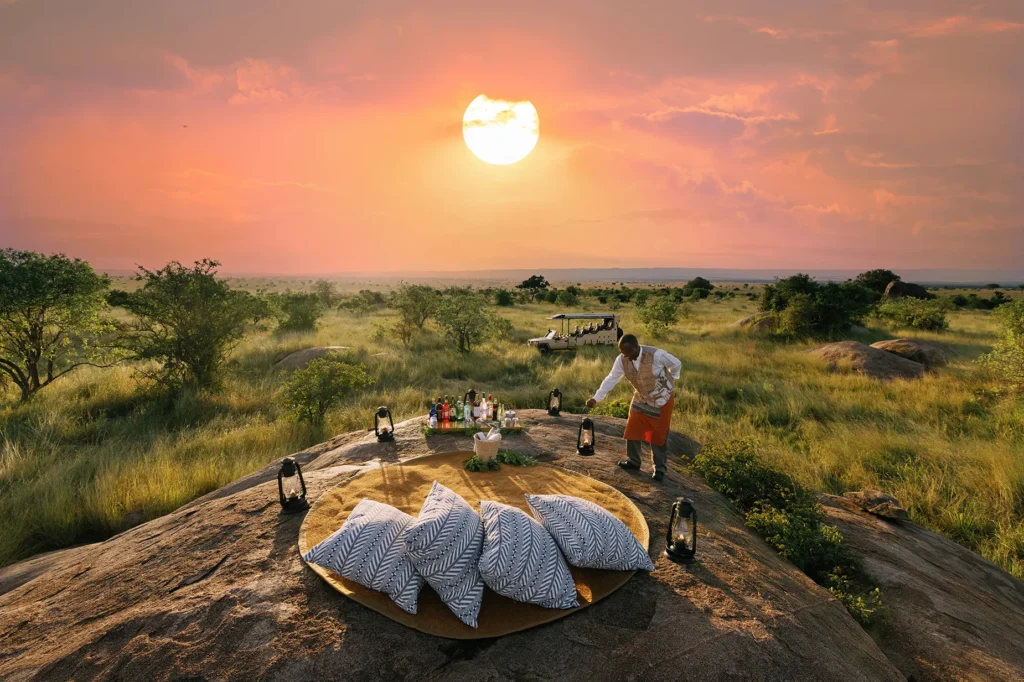
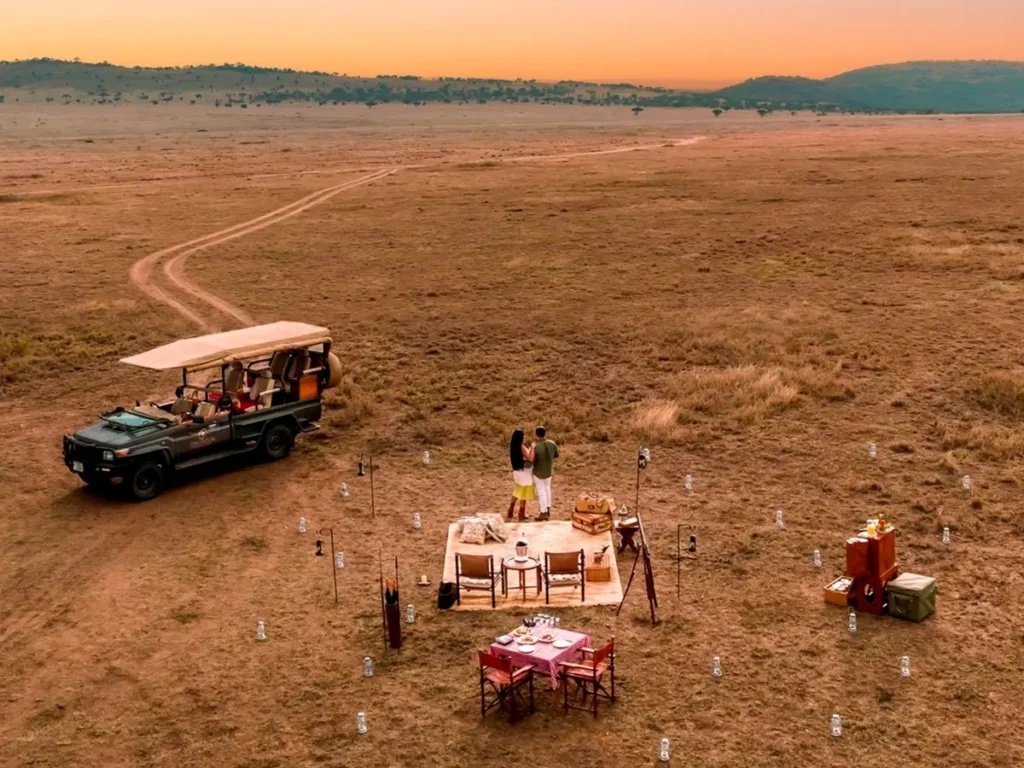
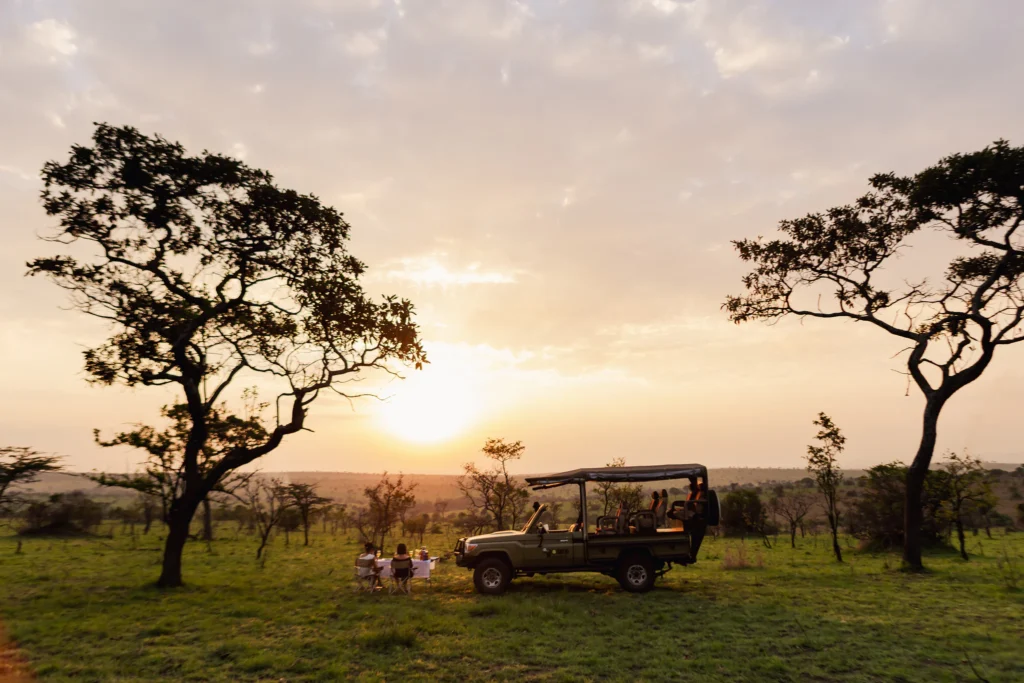
What a Safari Sun-downer Looks Like in the Serengeti

In the Serengeti, the setting is everything. Because the park spans vast plains dotted with acacia trees and seasonal rivers, sunsets can look almost cinematic. A sun-downer typically includes:

  1. A scenic bush location
    Your driver/guide takes you to a viewpoint or a natural clearing—somewhere off the main road where the scenery is open and the horizon is wide. You may stop near kopjes (rocky outcrops), riverbeds, or grassy plains.
  2. A warm welcome and a guided experience
    Guides often use this time to explain what you might see during the “last light” of day. Animals move differently in the evening: predators can become more active, herbivores gather, and birds start settling in for the night.
  3. Drinks and light refreshments
    Many sun-downers include beverages such as soft drinks, juices, beer, wine, or spirits (depending on the safari operator). Some camps or lodges offer snacks or small bites. The exact offering varies by package and budget.
  4. Time to take photos and simply enjoy
    The pace slows down. You’re not rushing between sightings—this is a moment to breathe, reflect, and capture the atmosphere.
  5. A wildlife-driven ending
    Even though it’s a “social” part of the safari, it’s still all about wildlife. Depending on timing and location, your sun-downer might coincide with dramatic animal activity—like grazing herds silhouetted against the sky, lions resting in the distance, or elephants moving along a path.


Why the Serengeti Is Perfect for a Sun-downer

The Serengeti is among the most iconic safari ecosystems on Earth. It’s famous for large-scale migration and predator-prey interactions, but sunset is where many visitors feel the emotional pull of the place.

Here are a few reasons a sun-downer works especially well in the Serengeti:

The landscape changes color fast

From late afternoon to dusk, the sky shifts in intensity—blues, golds, and deep oranges—while the grasslands darken. It’s an incredible backdrop for photos and storytelling.

Wildlife behavior becomes more visible

Many animals are most active around dawn and dusk. That means your guide can often spot movement just as the sun drops—giving your sun-downer a “real-time wildlife” feel rather than a purely scenic stop.

The bush quiet is part of the magic

During sun-downer time, you get a sense of scale. The air feels cooler, insects begin to hum, and far-off sounds become more noticeable. It’s a reminder that you’re not just visiting a park—you’re entering a living system.


How It Fits Into Tanzania Safaris (and the Best Safari in East Africa)

When people search for the best safari in East Africa, they’re often comparing destinations like Kenya and Tanzania, and looking at the quality of wildlife sightings, guide expertise, and overall experience design.

A sun-downer stands out because it adds variety to the safari rhythm. A typical day may include:

  • Morning wildlife viewing
  • Midday rest
  • Afternoon drives and sighting peaks
  • A sunset sun-downer to end the day emotionally and visually

This structure makes the experience feel complete rather than repetitive.

For travelers choosing Tanzania safaris, the Serengeti’s sun-downer is also a way to experience the park beyond the “numbers” of sightings. It’s about immersion—being present for the moment when daytime wildlife routines gradually shift toward night-time behaviors.


Short Tanzania Safaris: Can You Still Enjoy a Sun-downer?

Many travelers choose short Tanzania safaris because of limited vacation time. The good news? A sun-downer can still be included even on shorter schedules, especially if your safari focuses on high-impact regions.

For example, short safari itineraries often concentrate on areas with:

  • reliable wildlife density,
  • scenic landscapes,
  • and convenient sunset timing.

Whether you’re on a few days or a week, a well-designed short itinerary usually includes sunset as a “signature moment.” That’s because guests remember experiences, not just routes.

So even if you’re doing short Tanzania safaris, ask your safari planner about:

  • whether a sun-downer is included,
  • where it happens (plains, kopjes, river areas),
  • what drinks/snacks are provided,
  • and how the timing fits into your day.


Choosing the Right Safari Operator for Sun-downers

Not all sun-downers are identical. The best experiences are typically those that prioritize safety, comfort, and respect for the environment. When choosing your Tanzania safari package, consider:

  • Guide expertise: A knowledgeable guide can make the experience more meaningful.
  • Location quality: A scenic spot enhances the sunset atmosphere.
  • Pacing: You want time to relax—not a hurried photo stop.
  • Comfort level: Some packages offer more “camp-like” setups, while others are simpler.
  • Inclusion in your itinerary: Confirm exactly when it happens so it doesn’t conflict with game-drive plans.

Conclusion: Why Cycads African Safaris Often Get Sun-downers Right

A safari sun-downer in the Serengeti isn’t just a drink in the bush—it’s an experience that captures the soul of Tanzania wildlife watching. It blends sunset scenery, guide storytelling, and the possibility of extraordinary animal sightings at day’s edge. For anyone booking Tanzania safaris, it’s a memorable highlight that helps define why Serengeti travel remains the best safari in East Africa for so many visitors.

If you’re considering short Tanzania safaris, remember that the most impactful moments can be built into tight schedules—especially when sunset is planned thoughtfully. And when travelers choose operators like Cycads African Safaris, they’re often looking for an itinerary that balances logistics, comfort, and the magic of the African sunset.

In the end, a sun-downer is what you carry home: the colors of the sky fading into night, the quiet of the plains, and the feeling that the Serengeti is larger than life. Contact us on info@cycadssafaris.com OR +1 (818)2906623