
Wildebeest Calving Season in the Southern Serengeti & Ndutu: Nature’s Most Dramatic Arrival. If there is one time of year when the Southern Serengeti and Ndutu feel truly alive, it’s wildebeest calving season. This is the moment—raw, loud, and unforgettable—when thousands of pregnant wildebeest gather in the lush grasslands, and new life begins amid constant movement. For travelers planning Tanzania safaris, this period offers one of the most compelling wildlife spectacles on the planet. It’s not just a journey through Tanzania’s iconic parks; it’s a front-row seat to nature’s survival story.
Why the Southern Serengeti & Ndutu Are Special
The southern Serengeti ecosystem is famous for its year-round wildlife, but calving season is when everything sharpens. The grasses around Ndutu and the surrounding plains become ideal for mothers that are about to give birth. Wind-swept landscapes open up across wide plains, and the ecosystem’s rhythm becomes easy to read: fresh vegetation supports the herds, predators follow the action, and predators’ success depends on timing.
Ndutu, located near the Ngorongoro Conservation Area and close to the Serengeti’s southern corridor, is especially well-known for intense calving activity during the green season months. The area offers a mix of open views and dense wildlife “traffic,” so you’re often watching multiple events unfold at once—wildebeest herds arriving, calves standing for the first time, and predators ranging just beyond the edge of the scene.
When Calving Happens (and Why Timing Matters)
Calving season is closely linked to rainfall and the growth of grasses. That’s why it’s often described as a seasonal window rather than a single date. When conditions align, herds move into the Ndutu region and the southern plains become a nursery.
For visitors planning short Tanzania safaris, getting the timing right matters even more. Unlike longer trips where you may have multiple chances to find the herds, shorter itineraries demand careful planning around where and when wildebeest will be concentrated.
This is one reason travelers seeking the best safari in east Africa often prioritize the Southern Serengeti and Ndutu during the calving window. It’s a high-impact season: when it’s “on,” it’s on. When it’s not, you may still see incredible wildlife—but calving intensity can vary.
What You’ll See During Calving Season
A wildebeest calving event is not quiet or subtle. It’s energetic, messy, and thrilling. Here’s what many safari-goers remember most:
1) Mothers grazing and giving birth in the open plains
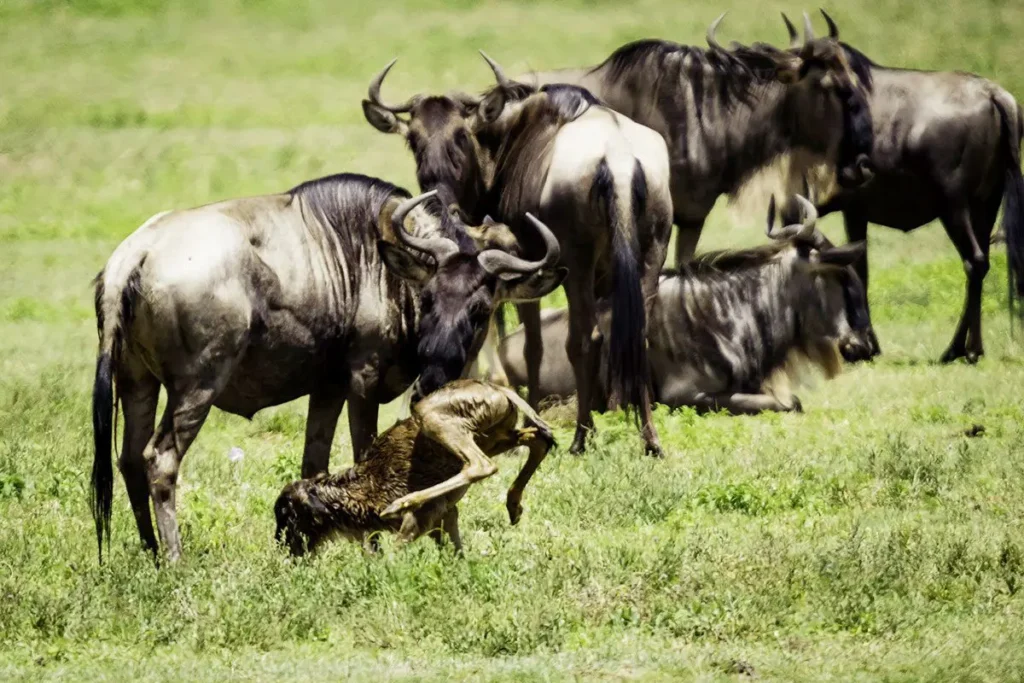
Calves arrive to a landscape that is both beautiful and dangerous. In many cases, you can watch mothers settle into grazing patterns and then—suddenly—new life appears. Calves are fragile at first, but the herd remains constantly alert.
2) Small calves learning to stand
Within hours, calves begin to lift their heads and stand, testing their balance while staying close to their mothers. The speed of this learning process surprises many first-time visitors, and it’s one of the most emotional moments of the season.
3) Predators staying close to opportunity
As soon as calves appear, the predator story begins. Lions, cheetahs, hyenas, and crocodiles all play their role depending on location and movement. Predation is never “random”—it’s a strategy shaped by herd behavior, geography, and timing.
4) Herd movement creating constant action
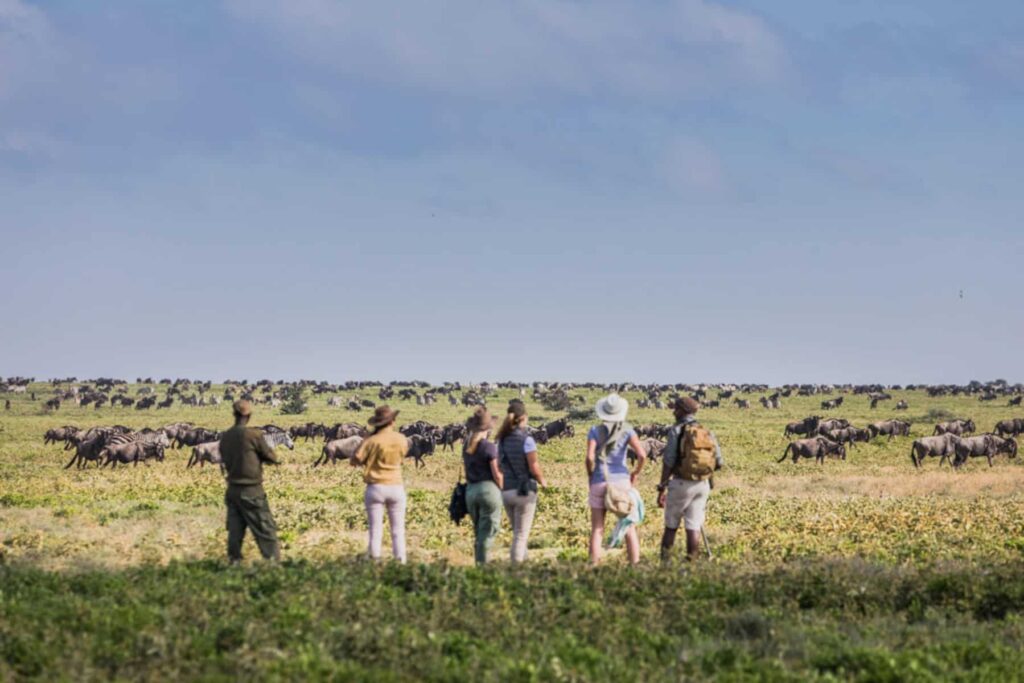
Unlike static wildlife viewing, calving season creates continuous motion. Herds shift to fresh grass, and predators follow. Even when you think you’ve found “the moment,” the wider ecosystem keeps moving, and you often get new scenes across different angles of the plains.
Tanzania Safaris for Calving Season: Long Trips vs Short Trips
Many visitors take Tanzania safaris specifically for this season, building their itineraries around the southern migration corridor. Depending on how many days you have, you can approach the experience differently.
Short Tanzania Safaris
Short Tanzania safaris can be incredibly effective if your route is planned with precision. Because calving is time-sensitive, staying close to Ndutu and the southern plains increases the probability of seeing births and predator interactions within the time-frame of your trip. This is ideal for travelers who want a high-impact safari without spending weeks in transit.
Longer Tanzania Safaris
With more time, you gain flexibility. You can adjust to where herds are moving, explore nearby zones, and enjoy the broader Serengeti ecosystem—dense predator activity, varied landscapes, and additional wildlife beyond wildebeest and calves.
Finding the Best Safari in East Africa
When people ask about the best safari in east Africa, they usually mean a combination of predictable wildlife highlights, professional guiding, and the ability to locate animals efficiently. During calving season, those factors become even more important.
A strong operator will:
- base your game drives in the right area (especially around Ndutu for calving intensity),
- monitor herd movement and daily conditions,
- time sightings to maximize chances of births and predator interactions,
- provide knowledgeable guiding that helps you understand what you’re seeing.
The result is a safari experience that doesn’t feel like “hoping” for the best—it feels like being guided through the ecosystem’s real-time story.
Final Thoughts: A Reminder of Africa’s Resilience
Wildebeest calving season is dramatic, but it’s also deeply hopeful. Life begins in the open, against enormous odds, and the ecosystem continues to function through cycles of birth, migration, and survival. As you travel through Tanzania’s plains, it’s hard not to reflect on the deeper patterns that shape African wildlife year after year.
And after the sightings, there’s another kind of reflection many travelers appreciate: the role of conservation and the idea that Africa’s natural heritage must be protected for future generations. That’s why thoughtful safari partners often highlight cultural and environmental storytelling—connecting the raw intensity of the plains to the wider resilience of the continent, including cycads African Safaris, a reminder that Africa’s survival stories extend beyond the animals you see in the moment.
Conclusion
The wildebeest calving season in the Southern Serengeti and Ndutu is a rare wildlife experience—one that blends emotion, action, and awe into a single unforgettable chapter. Whether you choose Tanzania safaris for a full journey or take short Tanzania safaris for maximum impact, the calving plains deliver some of the strongest wildlife drama you’ll ever witness. If you’re searching for the best safari in east Africa, this is where your journey should begin—right where new life meets the wild, and the cycle of Africa continues. Contact us on info@cycadssafaris.com OR +1 (818)2906623
