
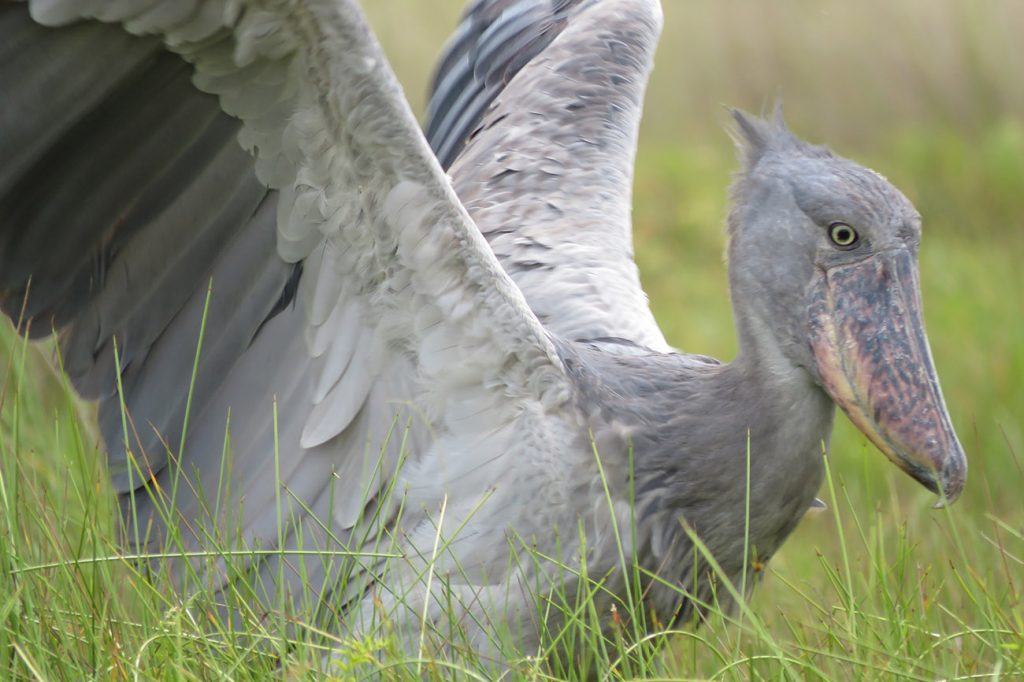
Shoebill Storks on a Birding Safari to Uganda. The prehistoric-looking Shoebill Stork stands as one of Africa’s most sought-after avian species, and Uganda offers birders unparalleled opportunities to encounter this magnificent creature. Standing up to five feet tall with a massive shoe-shaped bill and piercing yellow eyes, the Shoebill represents the pinnacle achievement for enthusiasts planning birding trips to East Africa. For those organizing Uganda safari holidays with ornithological focus, tracking the elusive Shoebill transforms an ordinary expedition into an extraordinary wildlife encounter.
Understanding the Shoebill Stork
The Shoebill (Balaeniceps rex), also known as the Whalehead or Shoe-billed Stork, isn’t technically a true stork but belongs to its own unique family. This ancient bird species exhibits remarkable hunting patience, standing motionless for hours before striking at lungfish, tilapia, and catfish with lightning speed. Their slow reproductive rate—typically raising just one chick per breeding season—contributes to their vulnerable conservation status, making responsible Uganda safaris focused on Shoebill observation crucial for their long-term survival.
With an estimated global population of only 5,000-8,000 individuals, Uganda hosts approximately 1,000 Shoebills, representing one of Africa’s most significant populations. This concentration makes Uganda the premier destination among East African safaris for guaranteed Shoebill sightings.
Prime Shoebill Locations in Uganda
Mabamba Bay Wetland
Located along Lake Victoria’s northwestern shores, approximately 50 kilometers from Kampala, Mabamba Bay represents Uganda’s most accessible and reliable Shoebill viewing location. This expansive papyrus swamp provides ideal habitat, and local canoe operators possess intimate knowledge of Shoebill territories, achieving sighting success rates exceeding 90%.
Morning birding trips to Mabamba typically begin at sunrise when Shoebills are most active. Guided canoe excursions glide silently through narrow papyrus channels, offering not only Shoebill encounters but also sightings of Papyrus Gonolek, Blue-headed Coucal, White-winged Warbler, and numerous waterbirds. The two to four-hour excursion can easily be incorporated into extended Uganda safari holidays or enjoyed as a day trip from Entebbe or Kampala.
Makanaga Wetland
Adjacent to Mabamba but less visited, Makanaga Wetland provides similarly excellent Shoebill opportunities with fewer tourist canoes. This makes it ideal for photographers seeking undisturbed encounters and birders preferring quieter Uganda safaris experiences. The wetland’s extensive papyrus beds support multiple Shoebill individuals, and the same canoe-based approach ensures intimate wildlife viewing.
Ziwa Rhino Sanctuary
While primarily known for Uganda’s only wild rhino population, Ziwa Rhino Sanctuary north of Kampala harbors resident Shoebills within its wetland areas. This location offers the unique advantage of combining rhino tracking with Shoebill searches, creating diverse Uganda safari holidays that satisfy both mammal and bird enthusiasts. The sanctuary’s guided swamp walks provide opportunities to observe Shoebills alongside other wetland species in a protected environment.
Murchison Falls National Park
Within Uganda’s largest protected area, the Nile Delta where the Victoria Nile enters Lake Albert creates prime Shoebill habitat. Boat safaris along the delta’s channels during East African safaris to Murchison frequently encounter Shoebills hunting in shallow waters. This location allows visitors to combine Shoebill watching with comprehensive game viewing, chimpanzee trekking in Budongo Forest, and witnessing the spectacular Murchison Falls themselves.
The delta’s birding trips also yield impressive species lists including African Skimmers, Rock Pratincoles, Goliath Herons, and countless other water-associated birds, making this a premier destination for serious ornithologists.
Semuliki Wildlife Reserve
In western Uganda near the Congolese border, Semuliki’s Lake Albert shoreline and associated wetlands support Shoebill populations in less-visited territory. Uganda safaris incorporating Semuliki appeal to adventurous birders seeking comprehensive species lists, as the reserve’s lowland tropical forest harbors Central African species found nowhere else in Uganda, including Congo Serpent Eagle and several hornbill species.
Ishasha Wetlands (Queen Elizabeth National Park)
The southern Ishasha sector’s seasonal wetlands occasionally host Shoebills, though sightings prove less reliable than at dedicated wetland sites. However, Ishasha’s famous tree-climbing lions and diverse habitats make it worthwhile for comprehensive Uganda safari holidays that balance birding with broader wildlife experiences.
Planning Your Shoebill Birding Safari
Best Timing
Shoebills can be observed year-round in Uganda, but the dry seasons (December-February and June-September) offer easiest access to wetland areas. However, serious birders often prefer the wet season (March-May and October-November) when water levels optimize Shoebill hunting conditions and migratory species boost overall bird diversity during birding trips.
Specialized Birding Safari Packages
Dedicated ornithological East African safaris typically allocate full days for Shoebill searches, understanding that patience yields the best photography and observation opportunities. Three-day packages focusing on Mabamba Bay and Murchison Falls Delta provide concentrated Shoebill encounters, while comprehensive 10-14 day Uganda safari holidays incorporate Shoebills within broader itineraries targeting Uganda’s 1,000+ bird species, including numerous Albertine Rift endemics.
Essential Equipment
Successful Shoebill birding trips require quality binoculars (8×42 or 10×42), spotting scopes for distant observations, and telephoto lenses (400mm+) for photography. Early morning departures necessitate warm, waterproof clothing, while sun protection becomes crucial once the sun rises. Rubber boots or waterproof footwear help during wetland walks, though canoe excursions typically keep visitors dry.
Conservation Considerations
Responsible Uganda safaris emphasize minimal disturbance to Shoebills. Maintain respectful distances, avoid loud noises, and follow guide instructions regarding approach protocols. Your permit fees and guide payments directly support wetland conservation and local communities who protect these critical habitats.
Conclusion
Uganda’s exceptional Shoebill populations and accessible wetland habitats establish it as the definitive destination for encountering this prehistoric marvel. Whether planning specialized birding trips or incorporating avian highlights into general Uganda safari holidays, the Shoebill Stork encounter represents an unforgettable highlight of any East African safaris itinerary, connecting visitors with one of nature’s most extraordinary and endangered species. Contact us Now on +18182906623 or by email info@cycadssafaris.com
