
The Samburu People: Kenya’s Rich Cultural Tapestry. In the rugged semi-arid landscapes of northern Kenya, where acacia trees dot the horizon and the sun blazes overhead, lives one of East Africa’s most culturally vibrant and resilient communities—the Samburu people. For travelers embarking on Kenya safaris, encountering the Samburu offers an extraordinary opportunity to witness a traditional pastoral lifestyle that has remained largely unchanged for centuries, making it an essential component of the best safari in East Africa.
Origins and Identity
The Samburu people, closely related to the Maasai, are a Nilotic ethnic group who migrated southward from the Nile Valley centuries ago. They call themselves “Loikop” or “Lokop,” meaning “people of the land,” though they are more commonly known by the name given to them by neighboring communities. Numbering approximately 310,000 people, the Samburu primarily inhabit the Samburu County in Kenya’s Rift Valley Province, an area characterized by dramatic landscapes ranging from the shores of Lake Turkana to the rugged Matthews Range and the wildlife-rich Samburu National Reserve.
Their language, also called Samburu or Sampur, belongs to the Eastern Nilotic branch of the Nilo-Saharan language family and shares remarkable similarities with Maa, the language of the Maasai. This linguistic connection underscores their shared heritage, though the Samburu have developed distinct cultural practices and social structures that set them apart in Kenya’s diverse ethnic landscape.
Traditional Pastoral Lifestyle
The Samburu are predominantly semi-nomadic pastoralists, and their entire cultural framework revolves around their livestock—cattle, camels, goats, and sheep. In Samburu society, cattle represent far more than economic assets; they embody wealth, status, and spiritual significance. The size of a man’s herd determines his social standing and marriage prospects, while cattle feature prominently in rituals, ceremonies, and conflict resolution.
Unlike sedentary agricultural communities, the Samburu move with their herds in search of pasture and water, a practice that requires intimate knowledge of the land, weather patterns, and natural resources. This nomadic existence has shaped their worldview, social organization, and relationship with the environment. For visitors on Kenya camping safaris who venture into Samburu territories, witnessing the daily rhythms of herding, watering livestock at remote wells, and the construction of temporary settlements offers profound insights into human adaptability and resilience.
Social Structure and Age-Set System
Samburu society operates through a sophisticated age-set system that governs social relationships, responsibilities, and progression through life stages. Males pass through distinct phases: boys (layiok), warriors (lmurran), and elders (lporor). The transition between these stages is marked by elaborate ceremonies that reinforce community bonds and cultural identity.
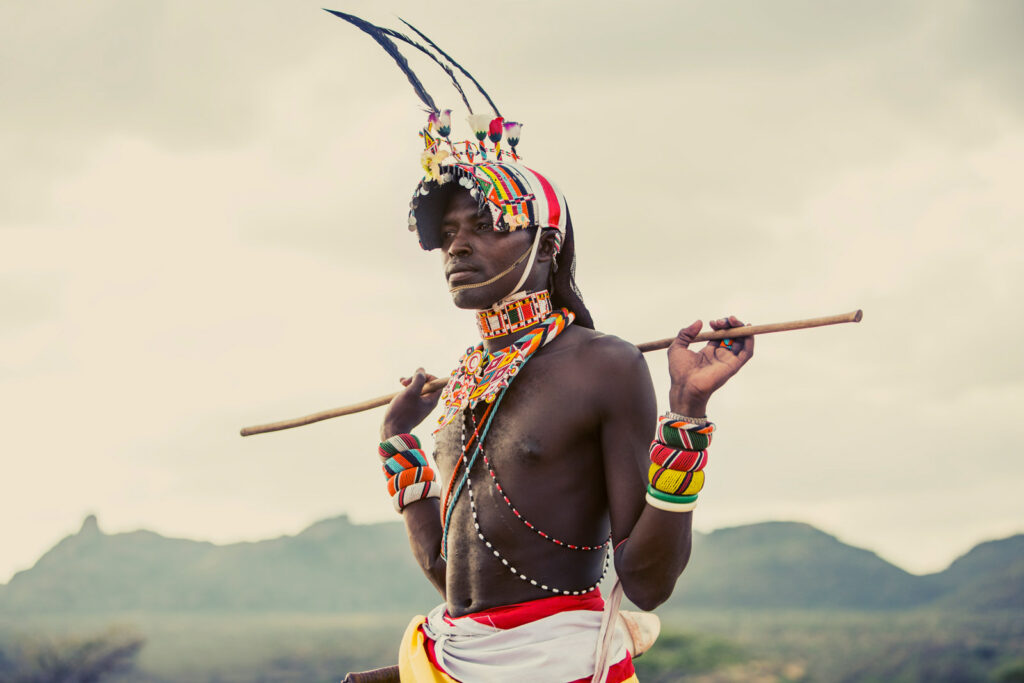
The warrior class, known as morani, holds particular cultural significance. Young men typically spend their late teens and twenties as warriors, during which they are responsible for protecting the community and livestock from threats. Warriors are instantly recognizable by their distinctive appearance: elaborately braided and ochred hair, colorful beaded ornaments, and traditional attire. This period represents a time of freedom, strength, and beauty in Samburu culture.
Women also progress through age grades, though their roles center primarily on domestic responsibilities, childcare, and maintaining the homestead. Despite these traditional divisions, Samburu women demonstrate remarkable strength and skill, constructing the portable houses (nkaji), gathering firewood and water, and creating the intricate beadwork that has become synonymous with Samburu cultural identity.
Distinctive Dress and Adornment
Perhaps nothing captivates visitors on Kenya flying safaris to Samburu regions more than the community’s striking traditional dress and elaborate adornment. Samburu people drape themselves in vibrant shukas—red, orange, and purple checkered cloths—that stand out brilliantly against the muted tones of the arid landscape. The predominance of red holds cultural significance, symbolizing bravery, strength, and unity.
Beadwork represents a sophisticated art form and communication system within Samburu culture. Women craft intricate necklaces, bracelets, anklets, and headpieces using colorful beads, with different colors and patterns conveying specific meanings about age, marital status, and social position. Warriors wear elaborate beaded necklaces and headbands, while unmarried women don large disc-shaped necklaces that cascade down their chests. This beadwork serves both aesthetic and social functions, creating a visual language that community members can read at a glance.
Both men and women practice body modification, including ear piercing and stretching. Large circular earrings and elongated earlobes are considered marks of beauty and tradition, connecting contemporary Samburu to their ancestors who practiced the same customs.
Spiritual Beliefs and Practices
The Samburu maintain a rich spiritual worldview centered on a monotheistic belief in Nkai (God), who resides in the sky and controls rainfall, health, and prosperity. Mountains, particularly Mount Nyiru and Mount Kulal, are considered sacred spaces where spiritual leaders conduct important ceremonies and communicate with the divine.
Laibon, or spiritual leaders, hold important positions in Samburu society, serving as prophets, healers, and advisors. These individuals possess specialized knowledge of medicinal plants, divination practices, and ritual procedures. They play crucial roles during important ceremonies, including the circumcision rituals that mark transitions between age grades.
Trees, particularly fig trees, hold spiritual significance as meeting places and sites for rituals. The Samburu maintain a deep respect for nature, viewing themselves as stewards rather than masters of the land—a philosophy that has enabled their sustainable coexistence with wildlife for generations.
Ceremonies and Celebrations
Samburu cultural life is punctuated by elaborate ceremonies that reinforce social bonds and mark important transitions. The most significant of these is the circumcision ceremony, which transforms boys into warriors and girls into marriageable women. These multi-day events involve ritual preparations, the circumcision itself, and subsequent celebrations featuring traditional songs, dances, and feasting.
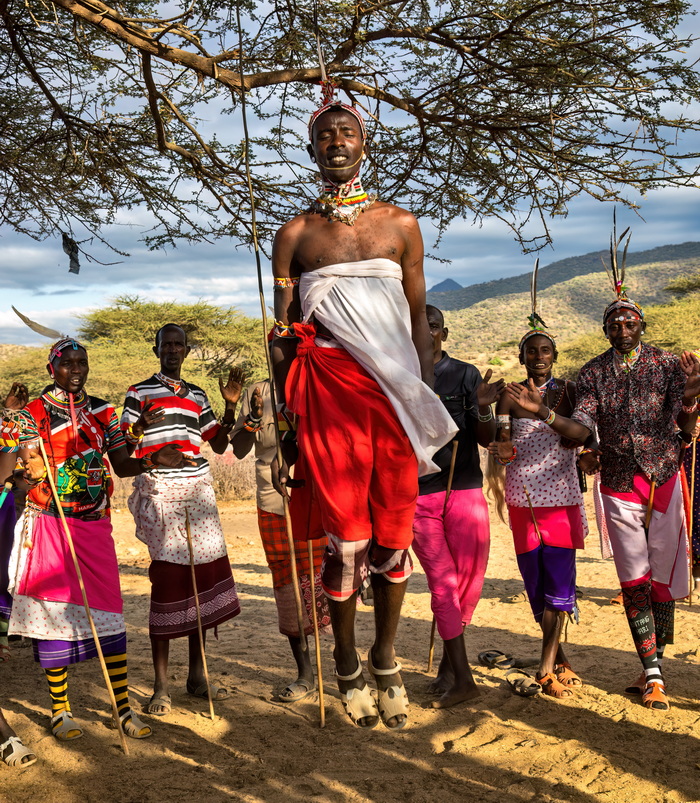
The warrior dances, known as “nkosho,” are particularly mesmerizing spectacles that visitors on Kenya safaris often have the privilege to witness. Warriors form circles, jumping high into the air with remarkable athleticism while maintaining rhythmic chanting. These performances demonstrate physical prowess and cultural pride, creating unforgettable experiences for cultural enthusiasts.
Wedding ceremonies involve complex negotiations, including bride price payments in livestock, and feature days of celebration with singing, dancing, and blessing rituals that unite two families and their extended networks.
Traditional Housing and Settlements
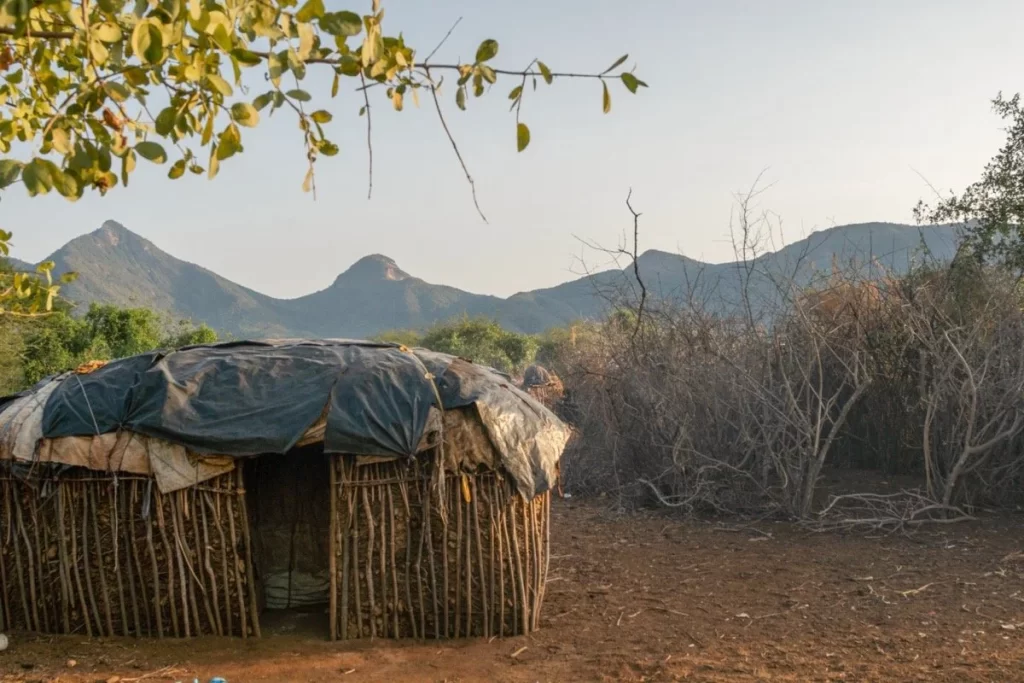
Samburu settlements, called nkang or manyattas, reflect the community’s semi-nomadic lifestyle and social organization. These circular or oval enclosures consist of small houses (nkaji) arranged around a central livestock corral, with the entire settlement surrounded by thorn bush fencing for protection against predators.
Women construct the houses using a framework of wooden poles covered with layers of cow dung, mud, and grass. These structures are surprisingly durable yet portable, allowing families to dismantle and relocate when pasture resources become depleted. The interior layout is carefully organized, with specific areas designated for sleeping, cooking, and storing possessions.
The communal nature of settlements reinforces social cohesion, with families sharing resources, childcare responsibilities, and protection duties. This collective approach to living has enabled the Samburu to thrive in an often harsh and unpredictable environment.
Challenges and Cultural Preservation
Like many indigenous pastoralist communities, the Samburu face mounting challenges in the 21st century. Climate change has intensified droughts, reducing available pasture and water sources. Land privatization and the expansion of agriculture and conservation areas have restricted traditional grazing routes. Education and modernization are gradually transforming social structures and cultural practices, particularly among younger generations.
Wildlife conservation efforts, while important for preserving Kenya’s natural heritage and supporting the best safari in East Africa, sometimes create tensions with pastoralist communities who have historically coexisted with wildlife. Balancing conservation goals with the needs and rights of indigenous peoples remains an ongoing challenge.
Despite these pressures, the Samburu demonstrate remarkable cultural resilience. Many communities actively work to preserve their language, traditions, and knowledge systems while selectively adopting beneficial aspects of modern life such as education and healthcare. Community-based tourism initiatives allow Samburu people to share their culture with visitors on Kenya camping safaris while generating income that supports local development and cultural preservation.
The Samburu Experience on Safari
Incorporating Samburu cultural experiences into Kenya safaris adds profound depth to wildlife-focused itineraries. Many tour operators offer village visits where travelers can interact with community members, learn about traditional practices, participate in beadwork sessions, and witness warrior dances. These encounters foster cross-cultural understanding and provide economic benefits to communities.
The Samburu National Reserve and surrounding conservancies offer unique opportunities to experience both spectacular wildlife—including the “Samburu Special Five” (Grevy’s zebra, reticulated giraffe, Somali ostrich, gerenuk, and Beisa oryx)—and authentic cultural interactions. Visitors on Kenya flying safaris can access remote areas where Samburu communities maintain traditional lifestyles with minimal outside influence.
Responsible cultural tourism respects community protocols, compensates participants fairly, and prioritizes authentic experiences over staged performances. Travelers who approach Samburu culture with genuine curiosity and respect often find these interactions to be among the most meaningful aspects of their East African safari experience.
Conclusion
The Samburu people embody the rich cultural diversity that makes Kenya an extraordinary destination for travelers seeking more than just wildlife encounters. Their vibrant traditions, distinctive aesthetic, and resilient spirit offer profound insights into alternative ways of life that honor ancestral wisdom while adapting to contemporary challenges.
For those planning the best safari in East Africa, incorporating Samburu cultural experiences—whether through Kenya camping safaris that place you in close proximity to traditional communities or Kenya flying safaris that access remote regions—creates a more holistic and meaningful journey. These encounters remind us that East Africa’s true treasures include not only its remarkable wildlife and landscapes but also its diverse human cultures.
At Cycads Safaris Uganda, we understand that the most memorable African adventures integrate wildlife, landscapes, and authentic cultural encounters. While our primary focus is on Uganda’s extraordinary offerings—from mountain gorilla trekking to savannah safaris—we recognize the value of experiencing East Africa’s broader cultural and natural heritage. Whether you’re exploring Uganda’s diverse ecosystems or venturing into Kenya’s Samburu territories, we’re committed to facilitating meaningful, respectful, and transformative safari experiences that honor both conservation and cultural preservation. The Samburu people remind us that Africa’s greatest asset is its diversity—of wildlife, landscapes, and the remarkable human communities who have shaped and been shaped by this extraordinary continent. Contact us on +18182906623 OR info@cycadssafaris.com
