
The Great Migration of Tanzania and Kenya. Every year, one of nature’s most extraordinary dramas unfolds across the sweeping savannas of East Africa. The Great Migration — a thundering, relentless movement of over 1.5 million wildebeest, accompanied by hundreds of thousands of zebras and gazelles — circles endlessly between the Serengeti in Tanzania and the Maasai Mara in Kenya. This phenomenon is not merely a migration; it is the largest overland movement of mammals on the planet, and it has captivated explorers, naturalists, and travelers for centuries. For those seeking the best East African safaris, witnessing the Great Migration is the ultimate bucket-list experience — raw, humbling, and utterly unforgettable.
The Endless Cycle: How the Migration Works
The Great Migration follows the rains. As the short rains arrive in Tanzania’s southern Serengeti — the Ndutu region — between November and January, lush, nutrient-rich grass carpets the plains. This is where the calving season begins. Approximately 500,000 calves are born within a concentrated window of just three weeks, flooding the landscape with newborn life. It is simultaneously a scene of breathtaking tenderness and brutal predation, as lions, cheetahs, and hyenas shadow the herds relentlessly. Tanzania safaris during this period offer an extraordinary window into the raw cycle of life and death that defines the African wilderness.
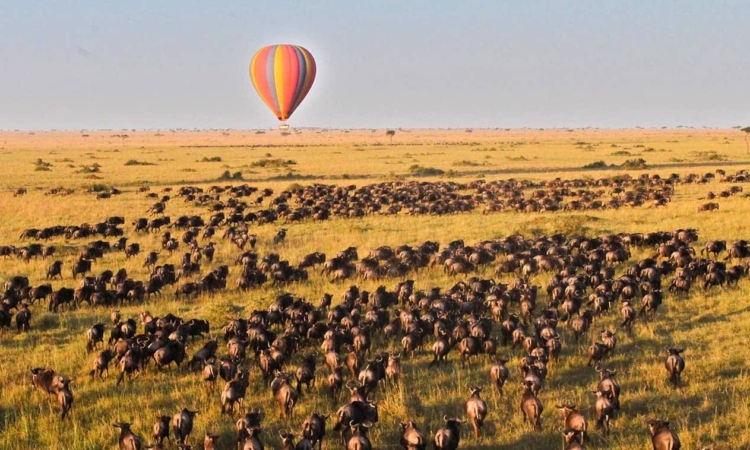
By April and May, as the long rains begin, the herds start their northward journey. Moving through the central Serengeti, they follow ancient instincts, guided by an inexplicable collective intelligence toward fresher pastures. The central and western Serengeti offer spectacular game-viewing at this stage, and many travelers opt for short Tanzania safaris that perfectly time their visit to catch the herds on the move through these iconic open plains. Even a compact, well-planned safari of three to four days can yield extraordinary sightings during this transit period.
The Mara River Crossings: Theater of Survival
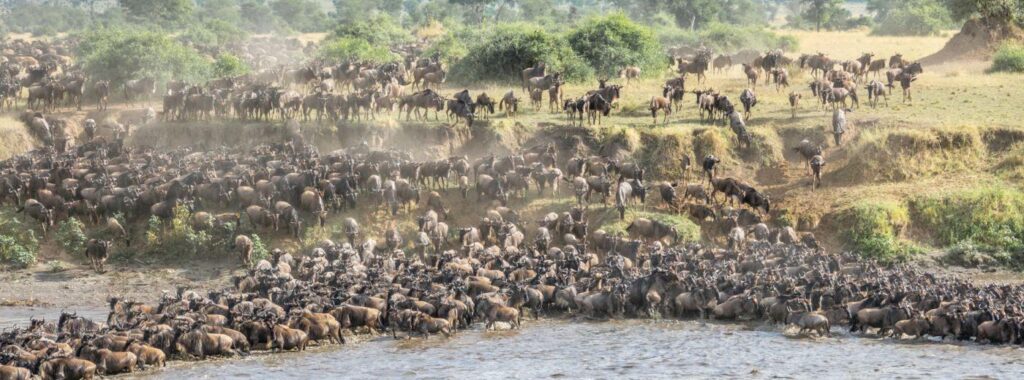
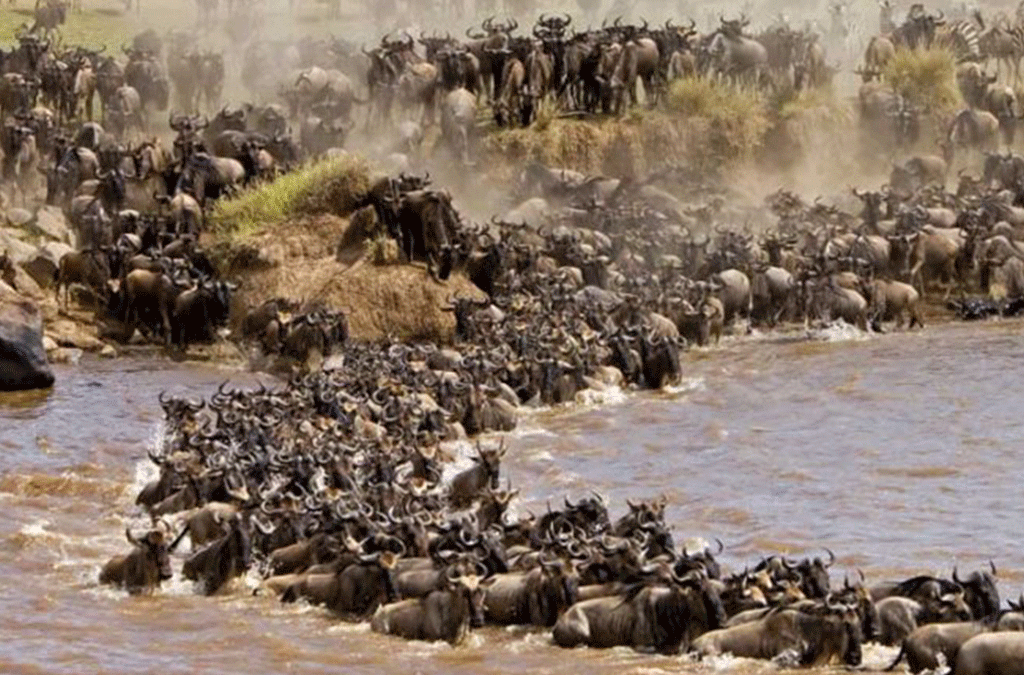
Perhaps no moment in the Great Migration is more electrifying than the Mara River crossings. Between July and October, as the herds enter Kenya’s Maasai Mara, they must repeatedly cross the crocodile-infested Mara River. The crossings are chaotic, desperate, and deeply dramatic. Thousands of animals plunge into churning waters at once, driven forward by those behind them, while enormous Nile crocodiles — some over three meters long — explode from the depths to seize their prey.
Kenya safaris during the July-to-October window are among the most sought-after wildlife experiences in the world. The Maasai Mara’s wide-open grasslands, exceptional predator density, and the sheer spectacle of the river crossings make this the peak season for East African travel. Tented camps and lodges positioned along the Mara River fill up months in advance, with guides and naturalists tracking the herds daily to give guests the best possible chance of witnessing a crossing firsthand.
Getting There: Flying Safaris and Seamless Access
Given the vast distances involved in following the Migration, air travel between key locations has become an essential and luxurious part of the safari experience. Kenya flying safaris allow travelers to hop between the Maasai Mara, Amboseli, and other key reserves without spending hours on dusty roads. A light aircraft gliding above the Rift Valley or landing on a bush airstrip in the heart of the Mara is itself a memorable experience — and it maximizes precious time in the bush. Similarly, flying between Tanzania’s Serengeti, Ngorongoro Crater, and Zanzibar enables travelers to experience a richer, more varied journey without sacrificing comfort or time.
For those looking to combine a Migration safari with beach relaxation, a classic itinerary might include three to four days in the Maasai Mara, followed by a flight down to the Serengeti to catch a different phase of the Migration, and finishing with a few days on the Tanzanian coast or the Zanzibar archipelago. This kind of combined Kenya-Tanzania circuit represents some of the best East African safaris available — covering diverse ecosystems, wildlife, culture, and coastline in a single unforgettable journey.
Beyond the Migration: What Makes East Africa Exceptional
As spectacular as the Migration is, it is only one thread in East Africa’s extraordinary wildlife tapestry. Tanzania’s Ngorongoro Crater — a collapsed volcanic caldera — is home to one of the densest concentrations of wildlife on Earth, including the rare black rhino. The Selous Game Reserve and Ruaha National Park in Tanzania offer wilderness experiences largely untouched by mass tourism. Meanwhile, Kenya’s Amboseli National Park provides iconic imagery of elephant herds moving beneath the snow-capped shadow of Mount Kilimanjaro, while Samburu in northern Kenya harbours unique species — the reticulated giraffe, Grevy’s zebra, and the Somali ostrich — found nowhere else on the continent.
Tanzania safaris and Kenya safaris each offer their own distinct character and rewards. Tanzania tends to appeal to those seeking vast, uncrowded wilderness and classic Big Five encounters, while Kenya combines extraordinary game with rich Maasai cultural heritage and ease of access. Together, they form one of the world’s most remarkable travel destinations.
Conclusion: Experience the Migration with Cycads African Safaris
The Great Migration is more than a wildlife event — it is a profound reminder of the power and fragility of the natural world. Standing at the edge of the Mara River as thousands of wildebeest surge through the water, or watching a golden sunset settle over the Serengeti plains while lions stir from their afternoon rest, leaves an impression that no photograph can fully capture. It changes how you see the world.
At Cycads African Safaris, we specialise in crafting personalised journeys that bring you to the heart of this extraordinary spectacle. Whether you are drawn to the drama of the Mara River crossings, the serenity of the Serengeti at dawn, or the cultural richness of a Maasai village visit, our expert team designs experiences that go far beyond the ordinary. From short Tanzania safaris for first-time visitors to extended cross-border expeditions combining Kenya flying safaris with Tanzania’s greatest parks, Cycads African Safaris ensures every detail is handled with passion and precision. Let us take you to where the wild things are — and let Africa speak for itself.
