
Semuliki National Park: Uganda’s Hidden Tropical Treasure. Tucked away in the remote Bundibugyo District of western Uganda, Semuliki National Park remains one of the country’s best-kept secrets and most ecologically significant protected areas. This 220-square-kilometer lowland tropical rainforest offers intrepid travelers a truly unique experience that differs dramatically from the typical savannah landscapes associated with Uganda safaris. For those seeking to explore Uganda beyond the conventional tourist circuit, Semuliki presents an extraordinary journey into one of Africa’s oldest and most biodiverse ecosystems.
An Ancient Forest with Congo Basin Heritage
What makes Semuliki National Park truly exceptional is its geological and ecological history. This forest is an eastern extension of the vast Ituri Forest of the Congo Basin, making it the only lowland tropical forest in East Africa. While much of Uganda transformed during the last ice age, Semuliki remained relatively unchanged, serving as a refuge for forest species and creating a living laboratory of evolution. This ancient heritage means that when you explore Uganda through Semuliki, you’re stepping into an ecosystem that has existed largely unchanged for over 25,000 years.
The park sits in the western arm of the Great Rift Valley, cradled between the Rwenzori Mountains to the southeast and the Democratic Republic of Congo border to the west. The Semuliki River, one of Uganda’s major waterways, flows through the park before emptying into Lake Albert. This strategic location creates a unique climatic zone that supports vegetation and wildlife more commonly associated with Central African forests than with East African ecosystems, offering safaris to Uganda a distinctly different dimension.
Remarkable Biodiversity and Endemic Species
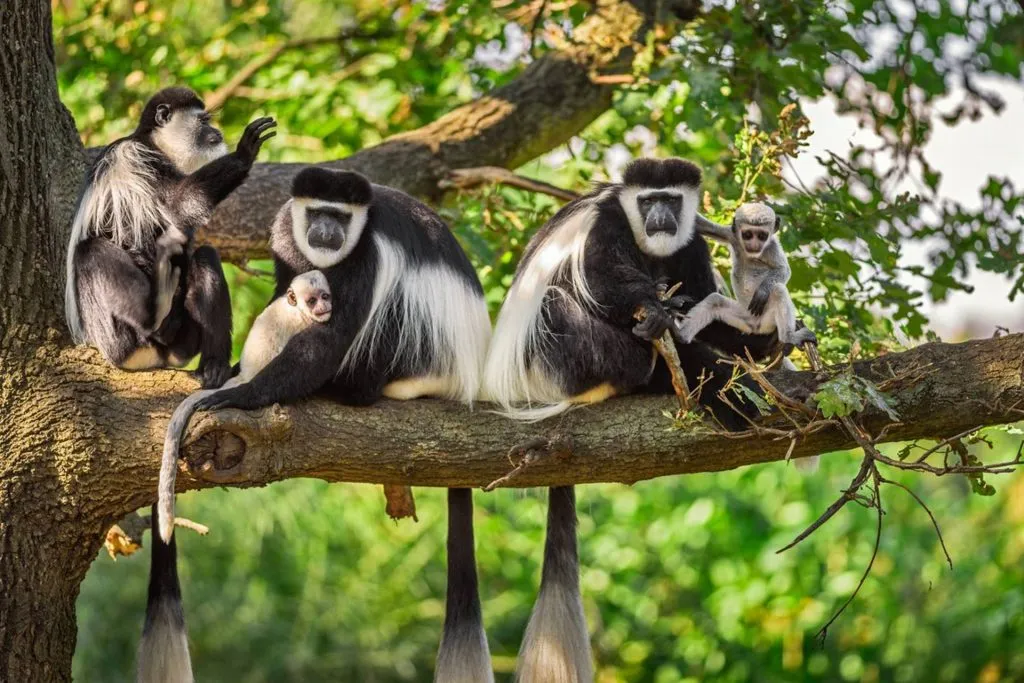
Semuliki National Park harbors an astonishing concentration of biodiversity, with over 53 mammal species recorded within its boundaries. The park is particularly renowned for its primate populations, including chimpanzees, black-and-white colobus monkeys, red-tailed monkeys, and the rare De Brazza’s monkey. The forest elephants that inhabit Semuliki are smaller and more elusive than their savannah cousins, adapted specifically to navigating dense forest environments.
However, it’s the park’s avian diversity that truly sets it apart as a premier destination for Uganda safaris. With over 441 recorded bird species, Semuliki represents approximately 40% of Uganda’s total bird species in less than 0.2% of the country’s land area. More impressively, the park is home to 46 species found nowhere else in East Africa, representing the only Guineo-Congolian forest biome birds recorded in the region. Species such as the Congo serpent eagle, Lyre-tailed honeyguide, Nkulengu rail, and the spectacular great blue turaco make Semuliki an essential destination for serious birders looking to explore Uganda’s ornithological treasures.
The Famous Sempaya Hot Springs
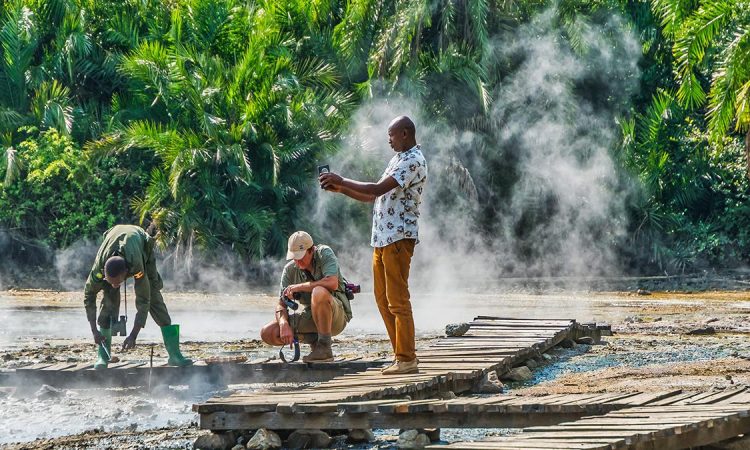
Among Semuliki’s most popular attractions are the Sempaya Hot Springs, a geological wonder that adds a fascinating dimension to safaris to Uganda. The park features two main hot spring sites: the male spring (Bintente) and the female spring (Nyasimbi). These geothermal features are manifestations of the tectonic activity along the rift valley, with the female spring forming a boiling geyser that shoots up to two meters high, creating a constant plume of steam visible from considerable distances.
The hot springs reach temperatures of up to 103°C (217°F), hot enough to boil eggs, which local guides often demonstrate to fascinated visitors. The springs are surrounded by lush vegetation that thrives in the mineral-rich, warm environment, including towering palms and colorful flowering plants. The local Bamaga community considers these springs sacred, and their cultural significance adds depth to the visitor experience, connecting geological wonders with human heritage.
Forest Walks and Wildlife Tracking
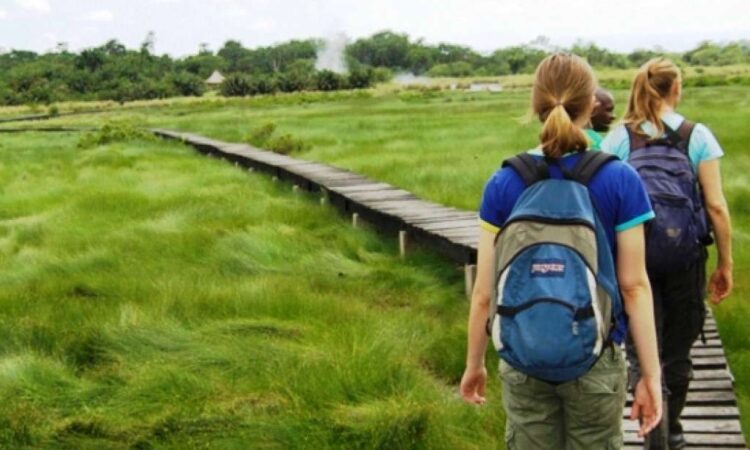
Unlike the vehicle-based game drives typical of savannah parks, exploring Semuliki National Park centers on guided forest walks along established trail systems. The park offers several walking routes, including the Red Monkey Track, which winds through palm forest habitat favored by De Brazza’s monkeys, and the Kirumia Trail, which leads through the forest to the male hot spring.
These walks provide intimate encounters with the forest ecosystem that vehicle-based Uganda safaris simply cannot match. The experience engages all senses: the calls of hornbills echoing through the canopy, the rich earthy scent of decomposing vegetation, the sight of colorful butterflies navigating shafts of sunlight, and the feeling of humid air characteristic of true tropical rainforest. Experienced guides interpret the forest’s secrets, identifying animal tracks, explaining plant uses, and ensuring visitors don’t miss the camouflaged wildlife that makes its home in this dense environment.
Cultural Encounters
The forests surrounding Semuliki have been home to the Batwa pygmy people for thousands of years. While most have relocated to surrounding areas, cultural encounters can be arranged that provide insights into traditional forest-based lifestyles, hunting techniques, and medicinal plant knowledge. The Bambuti people also maintain connections to these forests, and cultural tourism initiatives help preserve traditional knowledge while providing sustainable income for local communities.
Accessing Semuliki National Park
Semuliki’s remote location means it remains refreshingly uncrowded compared to Uganda’s more famous parks. The park is approximately 360 kilometers from Kampala, with the journey taking visitors through Fort Portal, one of Uganda’s most scenic towns nestled at the foot of the Rwenzori Mountains. The drive itself offers spectacular scenery, passing through tea plantations, traditional villages, and crater lake regions.
Most visitors to Semuliki combine their trip with other attractions in western Uganda, creating comprehensive itineraries that showcase the region’s diversity. The park works particularly well as part of safaris to Uganda that include chimpanzee tracking in Kibale Forest National Park, mountain experiences in the Rwenzoris, or wildlife viewing in Queen Elizabeth National Park.
Best Time to Visit
While Semuliki can be visited year-round, the drier months from June to September and December to February offer the most comfortable walking conditions. However, the wet seasons intensify the forest experience, with rushing streams, vibrant vegetation, and increased animal activity, particularly among primates and forest birds.
Conclusion
Semuliki National Park represents a frontier experience for those who truly wish to explore Uganda in all its ecological complexity. This ancient forest offers adventures that differ markedly from typical safari experiences, immersing visitors in an environment that connects Uganda to the vast Congo Basin ecosystem. The combination of unique wildlife, spectacular hot springs, pristine tropical forest, and cultural heritage creates an unforgettable experience for adventurous travelers.
For those planning comprehensive safaris to Uganda that go beyond the ordinary, Cycads African Safaris designs expert itineraries incorporating Semuliki National Park alongside Uganda’s other remarkable destinations, ensuring you discover both the famous highlights and the hidden gems that make Uganda truly the Pearl of Africa. Contact us now on +1818290662 or info@cycadssafaris.com
