
Ndutu Plains: Where Wildlife and Natural Beauty Converge. In the southern reaches of the Serengeti ecosystem, where Tanzania’s legendary wilderness meets the ancient volcanic highlands of the Ngorongoro Conservation Area, lies one of Africa’s most spectacular wildlife theatres—the Ndutu Plains. This transitional landscape, straddling the boundary between two of the continent’s most iconic protected areas, offers travelers on Tanzania safaris an unparalleled opportunity to witness nature’s most dramatic cycles of life, death, and renewal against a backdrop of breathtaking natural beauty.
A Landscape Shaped by Fire and Water
The Ndutu Plains derive their character from a unique geological heritage. Volcanic activity millions of years ago deposited nutrient-rich ash across the region, creating mineral-dense soils that support vast grasslands during the rainy season. Unlike the endless plains that characterize much of the Serengeti, Ndutu features a more varied topography, with scattered acacia woodlands, seasonal lakes, and gently rolling terrain that creates diverse microhabitats.
Two seasonal lakes—Lake Ndutu and Lake Masek—dominate the landscape during the wet season, transforming from dusty depressions into shimmering water bodies that attract thousands of flamingos, pelicans, and other waterbirds. These alkaline lakes, fed by seasonal rains and underground springs, become focal points for wildlife congregations, creating spectacular viewing opportunities rivaling those found on Tanzania camping safaris in the Maasai Mara
The short-grass plains that emerge after the rains present an almost surreal beauty—an emerald carpet stretching to the horizon, punctuated by isolated acacia trees and granite outcrops that provide shade and vantage points for predators. This seemingly simple landscape conceals extraordinary complexity, supporting one of the planet’s most productive ecosystems.
The Great Migration’s Most Dramatic Chapter
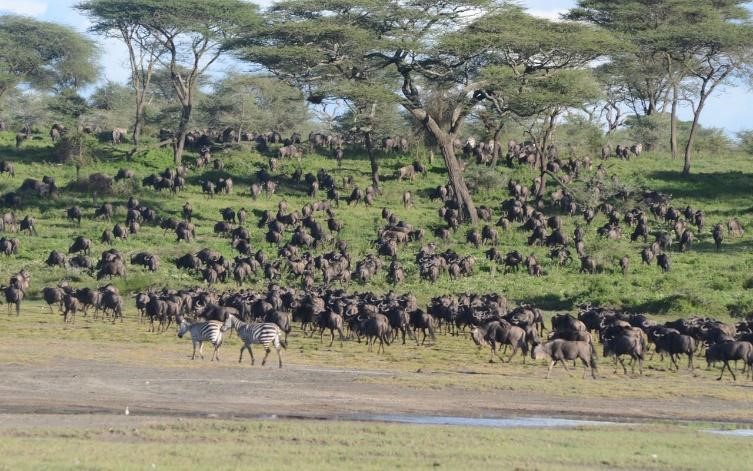
While the Serengeti-Mara ecosystem hosts the famous wildebeest migration year-round, the Ndutu Plains become the epicenter of this natural phenomenon from December through March. During these months, approximately 1.5 million wildebeest, 200,000 zebras, and countless gazelles converge on Ndutu’s nutritious short-grass plains to give birth to the next generation.
This calving season represents one of nature’s most spectacular events. An estimated 8,000 wildebeest calves are born each day during the peak calving period in February, creating what wildlife experts call the “baby boom” of the animal kingdom. The plains transform into a massive nursery, with newborn calves taking their first wobbly steps within minutes of birth, driven by the urgency to join the constantly moving herds that provide safety in numbers.
For travelers seeking the pinnacle of African safaris, witnessing the calving season offers unmatched drama. The abundance of vulnerable newborns attracts every predator in the ecosystem—lions, leopards, cheetahs, hyenas, and jackals—creating intense hunting scenes that unfold across the open plains. This concentration of predator-prey interactions provides photographers and wildlife enthusiasts with opportunities that rival anything available on Tanzania flying safaris to the Serengeti National Park.
Predator Paradise
The Ndutu region supports one of Africa’s highest concentrations of large predators, and the open terrain provides exceptional viewing conditions. Lions reign as the apex predators, with several prides maintaining territories across the plains. Unlike forest-dwelling lions that remain hidden, Ndutu’s prides often rest in the open, draped across termite mounds or lounging beneath the sparse shade of acacia trees.
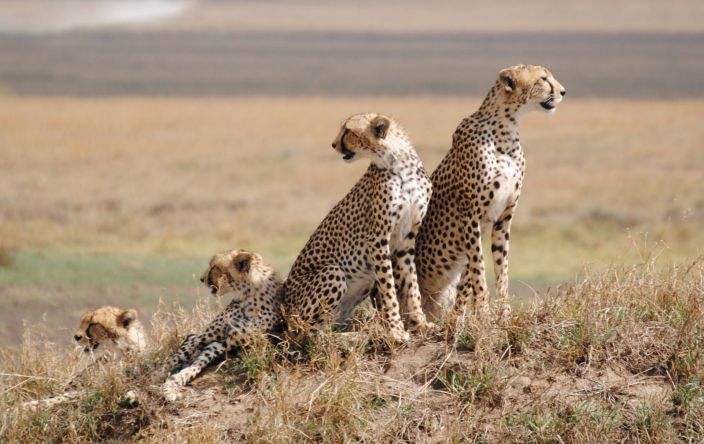
Cheetahs particularly favor Ndutu’s open grasslands, which provide ideal conditions for their high-speed hunting strategy. The flat terrain allows these elegant cats to spot prey from great distances and execute their spectacular chases, often reaching speeds exceeding 100 kilometers per hour. Female cheetahs with cubs are frequently encountered, offering touching scenes of maternal care alongside lessons in hunting techniques.
Leopards, though more elusive, inhabit the acacia woodlands and rocky outcrops scattered across the region. These solitary cats often haul their kills into trees, creating dramatic tableaus against the African sky. Spotted hyenas maintain large clans in the area, their whooping calls echoing across the plains at night, while smaller predators like bat-eared foxes, servals, and caracals add diversity to predator sightings.
Birdlife Extravaganza
Beyond its mammalian megafauna, Ndutu offers exceptional birding opportunities that appeal to ornithologists and casual observers alike. The seasonal lakes attract massive concentrations of lesser and greater flamingos, whose pink masses create stunning visual contrasts against the blue water and green plains. During peak periods, these lakes host over 100,000 flamingos, creating one of East Africa’s most photogenic scenes.
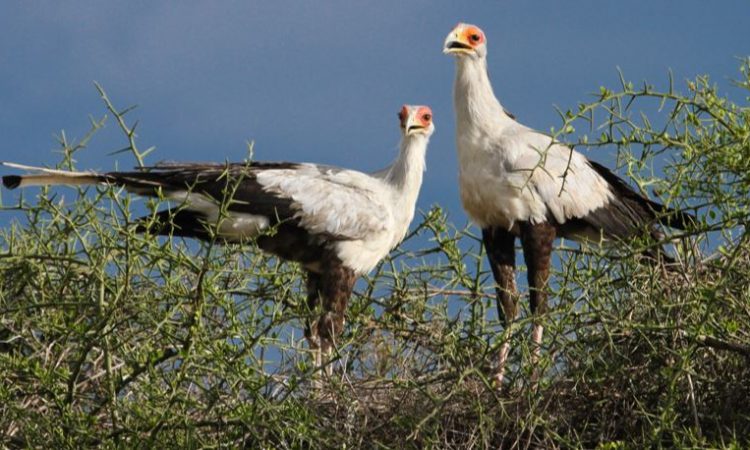
Raptors thrive in Ndutu’s ecosystem, drawn by the abundance of prey. Secretary birds stalk through the grasslands with their distinctive gait, hunting snakes and small mammals. Martial eagles, tawny eagles, and bateleurs soar overhead, while smaller raptors like kestrels hover above the plains searching for rodents. The presence of migratory species during certain months adds European and Asian birds to the already impressive resident population of over 500 recorded species.
Ostriches—the world’s largest birds—stride across the plains in small groups, males displaying their dramatic black and white plumage during breeding season. Kori bustards, secretary birds, and crowned cranes add to the avian diversity, making Ndutu a compelling destination for bird enthusiasts embarking on African safaris.
Diverse Safari Experiences
Ndutu’s location in the Ngorongoro Conservation Area rather than Serengeti National Park creates unique opportunities for safari experiences. Unlike the strict rules governing Serengeti safaris, Ndutu allows more flexible game viewing, including off-road driving that enables closer wildlife encounters while respecting animal welfare.
Walking safaris, though limited, are possible in certain areas under the guidance of armed rangers, offering an intimate perspective impossible from vehicle-based Tanzania safaris. The ground-level experience heightens all senses—the sound of grass crunching underfoot, the scent of wild sage, and the immediate awareness of one’s place in the food chain create profound connections with the wilderness.
For photographers, Ndutu provides unparalleled opportunities. The flat, open terrain allows for clear sightlines, while the dramatic light during golden hours illuminates subjects against clean horizons. The concentration of wildlife during calving season means action unfolds constantly, and the predator-prey dynamics create compelling storytelling opportunities through the lens.
The region’s limited accommodation options—mostly seasonal tented camps that operate from December through March—create an intimate safari atmosphere distinct from busier areas. These mobile camps offer comfort while maintaining authentic safari ambiance, with canvas walls separating guests from the surrounding wilderness. Night sounds—the roar of distant lions, the laugh of hyenas, and the snorts of nearby wildebeest—provide constant reminders of one’s immersion in wild Africa.
Scenic Beauty and Photography
Beyond its wildlife spectacles, Ndutu captivates visitors with its pure aesthetic beauty. During the green season, the plains explode with wildflowers, adding splashes of color to the verdant grasslands. Dramatic cloud formations build throughout the day, creating constantly changing light conditions that photographers dream about.
The scattered acacia trees, many shaped by decades of elephant feeding and weathering, become iconic subjects in their own right. These “umbrella thorns” create the quintessential African savannah aesthetic that features in countless wildlife documentaries and photographs. At sunrise and sunset, their silhouettes against colorful skies create compositions that define the visual language of African safaris.
The interplay between earth, sky, and wildlife creates moments of transcendent beauty—a cheetah surveying the plains from a termite mound at dawn, thousands of wildebeest streaming across the grasslands beneath towering thunderheads, or flamingos taking flight in perfect unison against the blue expanse of Lake Ndutu. These scenes embody the aesthetic that draws travelers to African safaris year after year.
Conservation and Sustainability
The Ndutu area faces ongoing conservation challenges common to wildlife-rich regions across East Africa. Human-wildlife conflict along conservation area boundaries requires constant management, while tourism pressure during peak season demands careful regulation to minimize environmental impact.
However, Ndutu benefits from its position within the Ngorongoro Conservation Area, a UNESCO World Heritage Site with strong protection measures. Tourism revenue directly supports conservation efforts and provides economic incentives for local Maasai communities to maintain wildlife corridors and tolerate predators.
Responsible safari operators emphasize low-impact tourism, limiting vehicle numbers around wildlife sightings and educating visitors about conservation challenges. This approach ensures that Ndutu’s spectacular wildlife concentrations and pristine landscapes remain intact for future generations, maintaining the region’s position among the world’s premier African safaris destinations.
Conclusion
The Ndutu Plains represent the convergence of everything that makes African safaris extraordinary—abundant wildlife, dramatic predator-prey interactions, spectacular landscapes, and the raw, unfiltered experience of wilderness. Whether witnessing the great migration’s calving season, observing predators in their element, or simply absorbing the profound beauty of the East African savannah, Ndutu delivers moments that resonate long after returning home.
While travelers often associate exceptional wildlife experiences with Tanzania safaris, Tanzania camping safaris, and Tanzania flying safaris to iconic destinations like the Maasai Mara, the Ndutu Plains offer equally compelling adventures in Tanzania’s portion of this shared ecosystem. The seasonal nature of Ndutu’s peak wildlife period creates a sense of urgency and exclusivity that enhances the experience.
At Cycads Safaris Uganda, we understand that the most memorable African adventures often combine experiences across East Africa’s diverse landscapes and ecosystems. While we specialize in Uganda’s extraordinary offerings—from mountain gorilla encounters to savannah wildlife safaris—we’re passionate about facilitating comprehensive East African experiences that showcase the region’s full spectrum of natural wonders. Book a trip with Cycads Safaris Uganda, and let us craft an African safari journey that transcends borders, combining Uganda’s unique treasures with the spectacular wildlife experiences of destinations like Ndutu, creating memories that define a lifetime of travel stories. Contact us on info@cycadssafaris.com OR +18182906623
