
Walking Safaris & Bush Walks in East Africa: A Deeper Way to Experience the Wild. East Africa has long been celebrated for classic game drives—big skies, iconic wildlife, and dramatic predator sightings. But there’s another side to the region that feels quieter, more intimate, and often more memorable: walking safaris and bush walks. When you step off the vehicle and onto the trail, the landscape changes. You begin to notice details you’d otherwise miss—fresh tracks in dust, the smell of wet soil after rain, the glint of water through the grass, the way birds rise from the canopy one by one. And because you travel at walking pace, your connection to the ecosystem becomes personal rather than purely observational.
Whether you’re planning gorilla trekking in Uganda, timing your trip around the great migration in Tanzania and Kenya, or simply seeking the kind of wildlife encounter that stays with you for years, walking safaris offer a different lens on East Africa’s biodiversity—one built on sound, smell, patience, and awe.
Why Choose a Walking Safari?
Most visitors understand what a safari “looks like.” Vehicles move along tracks; animals appear at a distance; photographers wait for the right moment. Walking safaris turn that formula upside down. Instead of relying only on what you can see from a vehicle window, you learn to “read” the environment.
A walking safari is not about leaving adventure behind—it’s about refining it.
- You feel the terrain. Roots underfoot, shifting sand, and hill climbs reveal the land’s personality.
- You hear wildlife first. Many animals announce themselves through rustling, calls, or the sudden hush of a forest.
- You witness ecosystem relationships. A trail might follow elephant paths, link to watering holes, or reveal how predators use cover.
- You experience slower, more meaningful encounters. Even when sightings are brief, your senses are fully engaged.
Walking also deepens conservation awareness. Many destinations in East Africa rely on community engagement and responsible tourism practices to protect habitats. Walking with trained guides helps visitors understand why rules exist—such as staying together, respecting wildlife boundaries, and following local safety protocols.
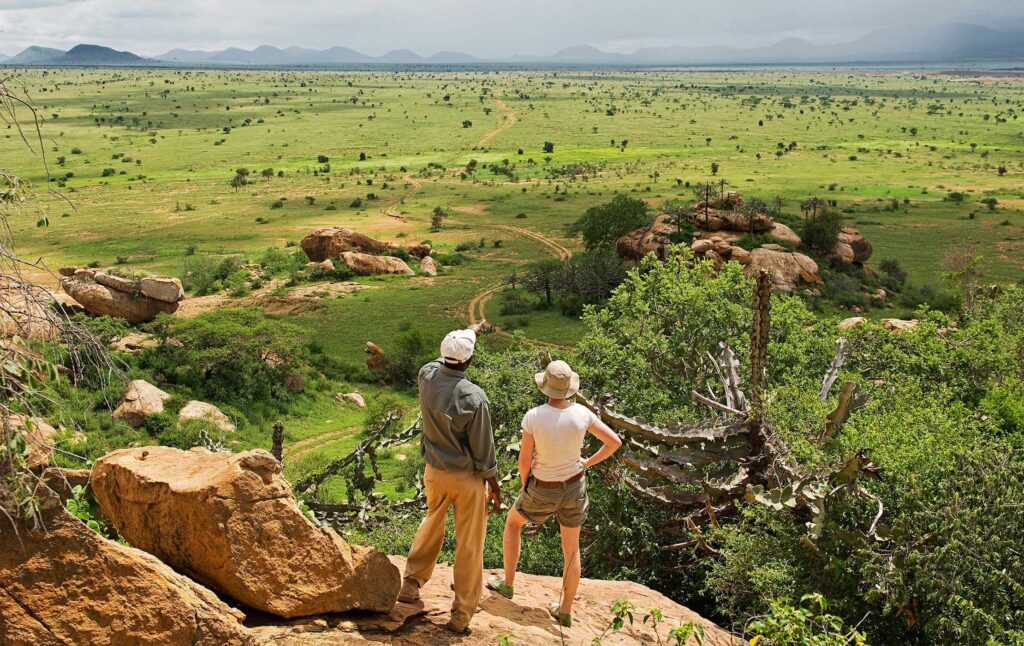
What a Bush Walk Feels Like in the African Wilderness
Bush walks can take many forms depending on the country and habitat. In Savannah landscapes, guides may lead you along game trails, through tall grass, or to vantage points where you can observe animals moving between feeding and watering areas. In forested regions, the walk becomes an exercise in listening—your attention constantly shifting between the rustle of leaves and the layered calls of birds and primates.
Expect the experience to be structured, not spontaneous chaos. Good walking safari operators brief guests before stepping out:
- Safety rules and group discipline (especially when predators are possible)
- How to behave around wildlife (noise level, distance, movement pace)
- What to watch for (tracks, droppings, feeding signs, flight patterns)
- Clothing and footwear guidance (long socks, neutral colors, sturdy shoes)
While walking safaris are often romanticized as “walking next to wildlife,” responsible guiding prioritizes respect and safety. In other words: you don’t chase animals; animals and landscapes reveal themselves.
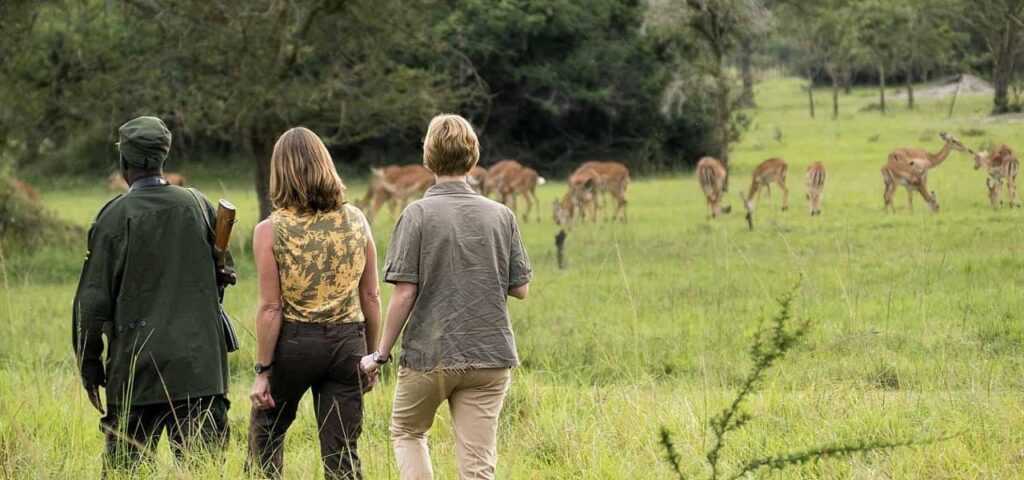
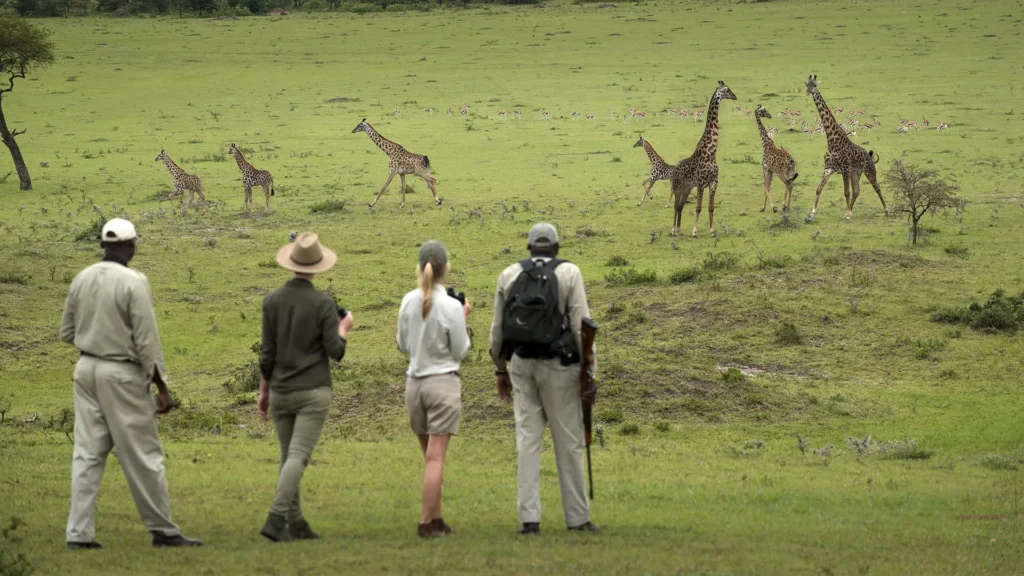
Walking Safaris in Tanzania and Kenya: Savannah on Foot
Tanzania and Kenya are famously associated with the great migration in Tanzania and Kenya—the seasonal movement of vast herds across grasslands and river systems. While many people imagine the migration as something you watch from a vehicle, walking safaris during the migration season can be uniquely powerful.
Of course, the specific experience depends on timing, location, and safety conditions, because migration routes shift. But when conditions allow, walking in these regions can feel almost cinematic: the landscape is alive with motion even when you’re standing still.
What you’ll notice during the migration on foot:
- The rhythm of grazers moving like currents through the grass
- Predators positioned strategically near crossing points
- Birds appearing and vanishing as they track insects or follow activity
- The constant churn of hoofprints shaping the trail itself
A walking safari here doesn’t remove the drama of East Africa—it strips away the barriers. Instead of merely seeing wildlife pass by, you begin to understand movement ecology: why herds cluster, why they drift, and how predators time opportunities.
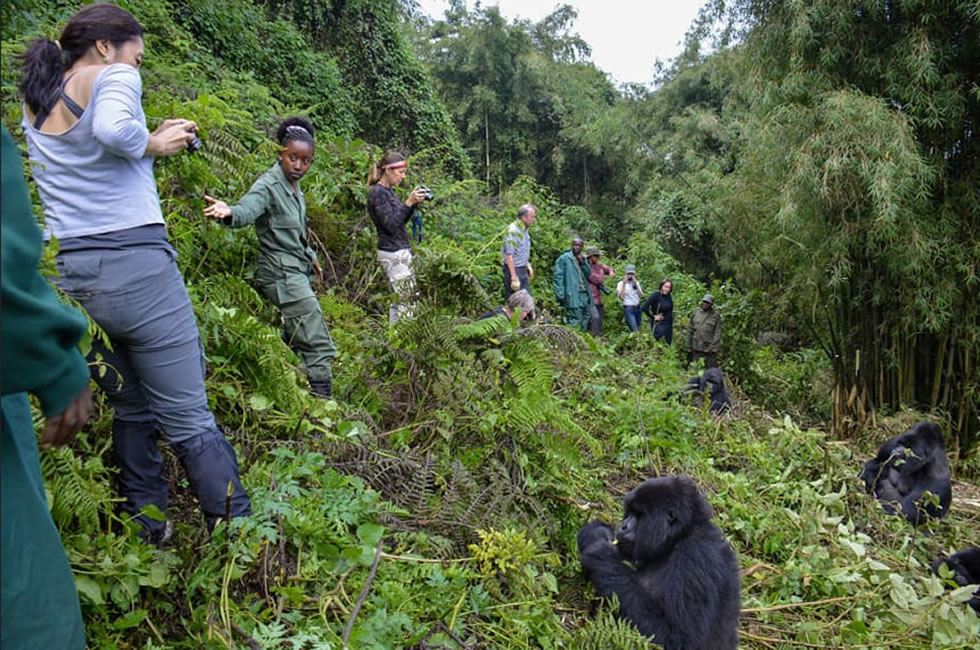
Gorilla Trekking in Uganda: The Ultimate Walking Adventure
For many travelers, gorilla trekking in Uganda is the highlight of their safari journey, and it’s one of the clearest examples of how walking creates a deeper connection to wildlife.
Gorilla trekking is not simply a walk—it’s an expedition that begins before you ever reach the forest. From the moment you set out in search of gorilla groups, the day becomes about tracking and focus. You move through forest terrain while scanning for signs: disturbed vegetation, fresh scent trails, distant calls, and the subtle ways the environment changes as you approach a group.
When you finally encounter gorillas, the experience is profoundly human-scale. You’re close enough to hear breathing, observe posture and behavior, and understand how calm yet powerful these animals are. The forest also teaches humility. You realize that you’re entering a living space with its own rules, and that your role is to witness responsibly.
Key things that often shape the trekking experience:
- Trail difficulty varies by location and gorilla movement
- Guides and trackers interpret signs to find groups effectively
- Weather can influence visibility and sound travel in the canopy
- Respectful distance and movement are essential for both safety and conservation
Because gorilla trekking is intrinsically tied to walking—often across steep, slippery, or densely vegetated terrain—it naturally becomes a full sensory experience. It’s not about “getting a photo.” It’s about being present with a wild family in its natural habitat.
Choosing the Right Season for Bush Walks
East Africa’s seasons shape everything: animal movement, vegetation height, and how easy it is to track wildlife.
- Dry seasons often provide clearer visibility and more predictable access to tracks and river corridors.
- Wet seasons can be lush and vibrant, with water sources more abundant—though trails may be muddier and vegetation may conceal animals.
For travelers aiming for the great migration in Tanzania and Kenya, seasonal timing is especially important. If your goal is to experience migration dynamics, you’ll want to plan around when herds are likely to be in certain areas. For gorilla trekking in Uganda, timing also matters, but the trekking experience remains deeply guided by the gorillas’ movements rather than a strict “schedule” approach.
A good safari plan blends your priorities with local guidance, because what you’ll experience depends not only on the calendar but also on real-time conditions.
How to Prepare for Walking Safaris
To truly enjoy a bush walk, preparation matters. Walking safaris ask more of your body than a vehicle-based day, even when the distance isn’t long.
Practical tips:
- Wear neutral, breathable clothing
- Use sturdy walking shoes with good grip
- Bring a light rain layer (forests and Savannah weather can shift quickly)
- Carry water and a small snack, as advised by your guide
- Protect yourself from sun and insects (hat, sunscreen, repellent)
- Keep your camera ready—but remember to look up sometimes and just breathe
Walking also encourages mindfulness. When you slow down, you start noticing patterns: a bird’s warning call, the direction predators are watching, or the way plant life bends where animals pass most often. Those observations are part of the reward.
What Makes a Great Guide?
Walking safaris succeed because of people—particularly guides who know how to interpret landscapes and wildlife behavior without turning exploration into risk.
A great guide helps you:
- Understand animal behavior at walking pace
- Stay patient during quiet moments
- Adjust your approach when conditions change
- Learn local ecology in a way that feels meaningful, not like a lecture
In East Africa, guides are often the bridge between humans and the wild. They can explain how rivers shape migration routes, why forest edges matter for primates, and how conservation efforts protect habitats for the future.
A Conclusion: Your Next Step with Cycads African Safaris
If you’re dreaming of East Africa through a more personal, sensory, and immersive lens, walking safaris and bush walks are a powerful choice. They bring you closer to the rhythms of the land—whether you’re tracking life in dense forest for gorilla trekking in Uganda, witnessing the drama and movement of the great migration in Tanzania and Kenya, or discovering the quiet magic of the Savannah at walking pace.
To turn that dream into a well-timed, well-guided journey, many travelers choose the expertise and care of Cycads African Safaris. With the right planning, the right guiding, and the right rhythm of days, your experience can feel effortless—while still being deeply adventurous.
Because in East Africa, the wilderness is never static. It moves, breathes, and reveals itself slowly. And when you walk with intention, you don’t just “see” the wild—you become part of the story it tells. Contact us on info@cycadssafaris.com or USA: +18182906623
